
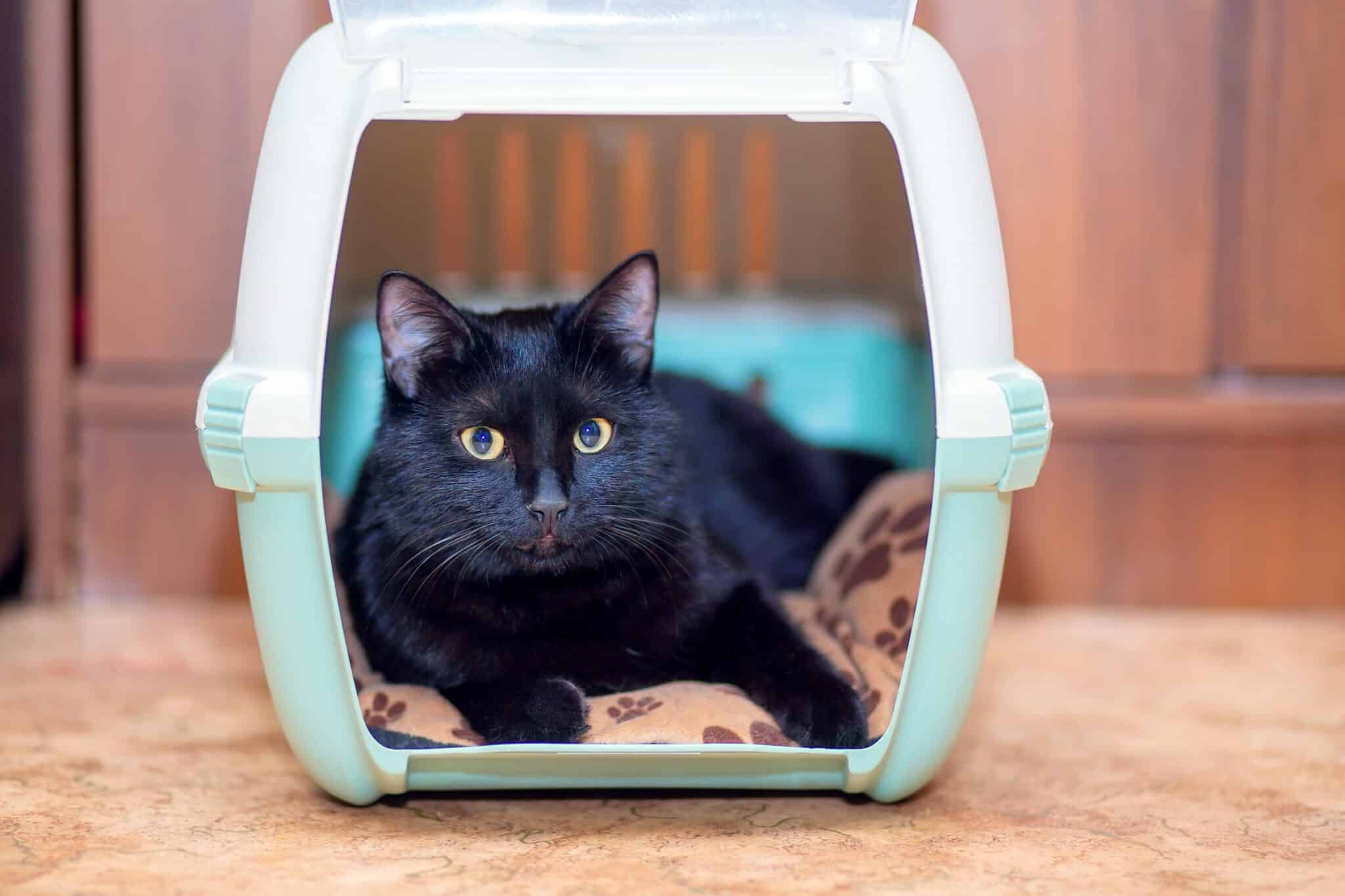
Moving our Doggies and Kitty-cats internationally can be a daunting experience. Usually, we find that we humans get more stressed than our furry companions. Still, there are pets that do struggle through the process. We’ve come up with a few tips for moving your pet internationally that should help you and your pets get through it.
Let’s begin at the beginning: The Before
Give yourself plenty of time! You will thank yourself later. Research your new country’s import requirements and pet-ownership rules. Going to Australia? Start planning a year in advance. Going to Germany? ‘Can probably do it in three months. Please do yourself a favor – don’t start your research two weeks before you want to leave. You will regret it. I promise.
Almost every country requires a microchip and rabies vaccination. Bring Miss Kitty in for a Vet visit well in advance of your estimated departure date. This is a good way to flush out any health issues and to get up to date on required vaccinations (and that microchip!). Remember, depending on the specific circumstances of your pet, sometimes you cannot enter a country until 21 days after the implant of a chip–so don’t delay. Here are a few tips for moving your pet before you depart.
Research phase
While in your research phase, choose a reputable pet shipping company (like us
Pick the right travel crate.
The airlines have very strict rules about pet travel carriers, and you will probably find out the hard way, at the time of check-in that your crate is not the right kind or size. Your dog’s crate must be large enough for them to stand up and turn around. Don’t eye-ball this. There is an equation to figure out the right size. Have your pup stand up on all four legs. Measure from the tip of her nose to her butt (do not include her tail) and then from the ground to the highest point of her head or the top of her ears–whichever is taller. You now have the length and height to figure out the crate size. We always add another 4 inches above a dog’s head. Here is an example: Your dog is 37 long and 26 inches high. The crate that should work for her will be 40L x25W x 30H (100.3 x 63.5 x 76.2 cm). Just so you know, though, this crate still might not be the right size for your SUPER furry dog or snub-nosed breed. Can you say: Owh boy? Cats are easier. The standard 28 x 20.5 x 21.5 in. (71 x 52 x 54.6 cm) crate like this will suffice. There are crates that are one-size smaller but rarely–if ever–will a housecat require a larger size. Also, many airlines will reject this size crate.
Familiarize Your Pets With The Crate
Now you have a crate. Time to start acclimating your pets. The more time you have, the better. You can do the same thing for both dogs and cats. For those pets that are especially skittish, remove the door and the top shell in the beginning. Throw some of their favorite toys inside. Eventually, you can feed them inside of it. Don’t force them to go inside! If you have the space, put it next to your couch and randomly drop treats into the crate when you are watching the weather channel. Add the top shell and a blanket or bed one day but don’t include the front door. When you feel that they are ready for the gate to be attached, do so. Remember not to leave it closed for too long. Everything in small steps, slowly assembling the crate around your pet. Over time your hound and kitty will go in on their own. Success!
The During:
Stay calm. You know that they can read you. Let’s look at a few more tips for moving your pet when travel day has arrived.
A few days before their travel, start icing water in their food bowls (yes, both. Food is not allowed in the crate during travel). There are lots of different types. Here is one type. Your pet should eat something small on the day of departure–but not too much. Prepare their crate the night before. Place a mat (water resistant is a good idea) and/or blanket with your scent on the bottom. Secure a zip-lock bag of food to the top of the crate. If your traveler has a special-needs diet or needs medication during travel, make arrangements in advance for these items. Add live animal stickers to the outside of the crate – front and back corner. Put all Fluffy’s/Rover’s original documents together in a clear envelope to give to your transport driver, and keep copies to travel with you (Do not take originals with you, human). Do not zip-tie the crate closed at this time. Your dog will come out of the crate two to three times before they are loaded onto the plane. Your cat may have the door opened for a final crate examination in the airline’s office.
Get Organized
Make sure you have contact information for your US transport coordinator and your import coordinator. Ask for flight tracking information. At the time of this writing, airlines do not allow the crate to have a tracking device attached to it.
Be prepared for delays: Delays can happen during international travel. Do you have a backup plan if the flight is canceled? Work this out with your transporter well in advance. Create a contingency of a worst-case scenario and assume you will activate the contingency. It is always best to have one human go ahead and leave another human behind until after the transport is complete.
After:
Monitor your pet’s health and behavior. They may seem a little off for a few days. Give them a quiet place to rest, provide plenty of fresh water and be patient, but if they don’t start to get back to normal after a few days and if you start to notice that they are not eating, are vomiting, or have diarrhea, it’s a good idea to contact a veterinarian.
If you have a cat, keep them indoors and even in just one room for a few days – maybe in your bedroom. If you have a dog, don’t let them off-leash until they are used to their new environment.
You got them there – YAY! Now your job is to make them feel safe, secure, and at home in their new home. We hope you found these few tips for moving your pet internationally helpful!
Have questions? Give us a call at 347-457-6091 or send us an email.